Quantile-based categorical statistics
Johannes Jenkner, Institute for Atmospheric and Climate Science, ETH Zurich, Switzerland
Traditional point-to-point verification is more and more
superseded by situation-based verification such as an object-oriented mode. One
main reason is that difficulties are encountered while interpreting the outcome
of a conventional contingency table based on amplitude thresholds. Firstly, a
predetermined amplitude threshold splits the distributions under comparison at
an unknown location. In an extreme case, single entries of the contingency
table can become zero. Then some scores cannot be computed (due to a division
by zero) and statements about model behavior are hard to make. Secondly, the
distributions under comparison usually differ considerably with respect to
their range of values. Customary scores do not fulfill the requirements for
equitability (Gandin and Murphy, 1992) and fail to be firm with respect to
hedging (Stephenson, 2000). Thirdly, the joint distribution usually comprises
multiple degrees of freedom. In the case of a 2x2 amplitude-based contingency
table, three linearly independent scores are needed to display all verification
aspects (Stephenson, 2000). It is possible to draw complementary information
from the considered datasets, if concurrent scores are applied simultaneously.
But it remains unclear, how to attribute individual verification aspects to
measures which are not totally independent from each other. Fourthly, it is not
meaningful to integrate amplitude-based scores over a range of intensities.
Averages over multiple thresholds are difficult to interpret, because it is not
obvious how many data points fall within individual ranges of thresholds.
To counteract the addressed drawbacks of categorical
statistics, frequency thresholds, i.e. quantiles, can be used instead of
amplitude thresholds to define the contingency table. Then two additional
interrelations are automatically included into the conceptual formulation:
false alarms = misses
misses + correct negatives = pN
Note that p denotes the quantile probability (0 < p
< 1) and N stands for the sample size. Due to the first equation, the
contingency table benefits from a calibration and is not influenced by the bias
any more. The problem of hedging is eluded, because it is no longer possible to
change the number of forecasted events without adjusting the number of observed
events. Due to the second equation, the base rate (1–p) is fixed a priori
and determines the rarity of events. The single remaining degree of freedom uniquely
describes the joint distribution. Thus, it is now possible to describe the
forecast accuracy or the skill related to individual intensities by means of a
single score.
Depending on the quantile probability, the four
entries of the contingency table only vary within a limited span (Fig. 1). If
the quantile probability is below 0.5, there are always some hits by definition.
If the quantile probability is above 0.5, there are always some correct
negatives by definition. The misses and false alarms are consistently limited
at the top. They are restricted either by the number of non-events (p < 0.5)
or by the number of events (p > 0.5). A random forecast imposes strongly
varying frequencies for all entries in the contingency table. A score is preferably
independent from all variations caused by the base rate.
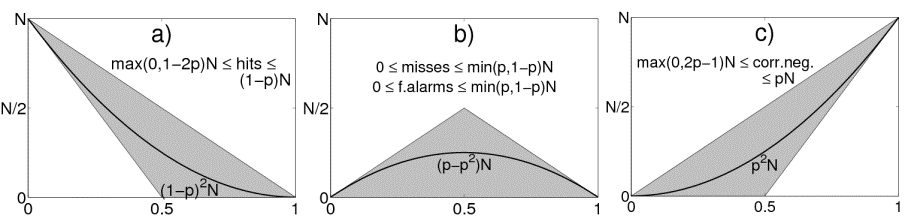
Figure 1: Possible entries (gray shaded) and random
expectation values (thick black lines) of the four entries in the 2x2
contingency table: a) hits, b) misses or false alarms, c) correct negatives.
The x-axis displays the range of quantile probabilities and the y-axis shows
the number of data points.
The Peirce Skill Score (PSS, equivalent to the True
Skill Statistics and the Hanssen-Kuipers Discriminant) is able to measure skill
without being perturbed by the base rate (e.g. Woodcock, 1976, Mason, 1989).
Thus, the PSS is ideally suited to measure the joint distribution, i.e. to
display the forecast accuracy on its own. Owing to the definition of a
quantile, the computation of the PSS simplifies to:
PSS = 1 – misses/missesrand
missesrand = (p – p2)N
To complement the verification, the bias is represented by the absolute (abs)
or relative (rel) quantile difference (QD):
QDabs = qmod – qobs
QDrel
= 2QDabs/(qobs + qmod)
Note that qobs and qmod denote
the observed and modeled (forecasted) quantile values, respectively. QDrel
is computed according to the amplitude component in the SAL measure (Wernli
et.al., 2008). The value therefore varies between -2 and
+2. The QD and the debiased PSS split the total error
into the independent components of bias and accuracy. Together, they provide a
complete verification set with the ability to assess the whole range of
intensities along the distributions under comparison.
The conventional PSS (with amplitude thresholds)
cannot distinguish between an amplitude error and a shift error. Only the
quantile-based contingency table provides the opportunity to distinguish
between the two types of errors. The new concept can be exemplified by means of
a simple forecast paradigm. Consider a constructed forecast problem with daily
rainfall amounts for 8 days (Fig. 2). The observed distribution (Obs.) is
symmetric and peaks on day 4 and 5. A first forecaster (Fcst 1) is able to
estimate the right amounts, but predicts the rainfall one day too late, meaning
that his forecast exhibits a shift error. A second forecaster (Fcst 2) is able
to estimate the right timing, but overpredicts the rainfall by 2 mm/day,
meaning that his forecast exhibits a bias. We want to compare both forecasts by
means of the PSS now. The conventional PSS is applied with an amplitude
threshold (AT) of 3 mm/day. The result is an equal scoring of PSS = 0.5 for
both forecasters. Thus, both forecasts show the same performance, but we cannot
assess the error type. The debiased PSS is applied with a frequency threshold
(FT) of 50%. The result is still PSS = 0.5 for the first forecaster, but it is
raised to PSS = 1 for the second forecaster. Since the bias is disregarded in
the PSS now, the second forecast is rated optimal. To account for the amplitude
error, the quantile difference is evaluated. It constitutes QDabs =
0 mm, i.e. QDrel = 0, for the first forecast. Likewise, it
constitutes QDabs = 2 mm, i.e. QDrel = 0.5, for the
second forecast. It is now possible to clearly distinguish between a shift
error and a bias. Thus, room for additional insights is provided.
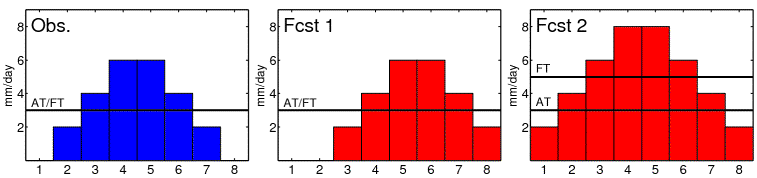
Figure 2: Forecast paradigm of forecasting rainfall amounts
for 8 days: Observations (left), first forecast (middle), second forecast
(right). The first forecast exhibits a pure shift error of 1 day. The second
forecast exhibits a pure bias with an overestimation of 2 mm/day. The selected amplitude threshold (AT)
constitutes 3 mm/day. The selected frequency threshold (FT) corresponds to the
50% quantile.
To
aggregate the scores over intensities, weighted averages can be computed over
quantiles. Thereby, QDrel is integrated with its absolute value,
because individual quantiles with an over- and underestimation can cancel each
other out otherwise. The weights w(p) correspond to the arithmetic and the
geometric mean for the QDrel and the PSS, respectively:

A convenient advantage of using quantiles is a
stabilization of the sample uncertainty for rare events. Bootstrap confidence
intervals for the PSS reveal that the uncertainty usually only slightly
increases while moving towards extreme quantiles. Quantile probabilities
inherently are not affected by amplitude uncertainties, but their
transformation to quantile values, i.e. corresponding amplitudes, suffers from
ambiguities. We can achieve a high confidence for the PSS value for a certain
quantile, but still hold a low confidence for the quantile estimation. However,
since arbitrary amplitudes are not related to the sample distribution, it is
sometimes useful only to consider quantiles, corresponding for example to
return periods of extreme rainfall events.
An elaborate description of the methodology as well as
an application to daily rainfall forecasts of the COSMO1
model over Switzerland can be found in Jenkner
et.al. (2008).
A printable pdf version of this web site can be
downloaded here.
References:
Gandin, L.S., and A.H. Murphy, 1992: Equitable skill
scores for categorical forecasts. Mon. Wea. Rev., 120,
361-370
Jenkner, J., C. Frei, and C. Schwierz, 2008:
Quantile-based short-range QPF evaluation over Switzerland. Submitted to
Meteorol. Z. download
Mason, I., 1989: Dependence of the critical success
index on sample climate and threshold probability. Aust. Met. Mag., 75-81
Stephenson, D.B., 2000: Use of the Odds Ratio for
diagnosing forecast skill. Wea. Forecasting, 15, 221-232
Wernli, H., M. Paulat, M. Hagen, and C. Frei, 2008:
SAL – a novel quality measure for the verification of quantitative
precipitation forecasts. Mon. Wea. Rev., in press
Woodcock, F., 1976: Evaluation of Yes-No forecasts for
scientific and administrative purposes. Mon. Wea. Rev., 104,
1209-1214